
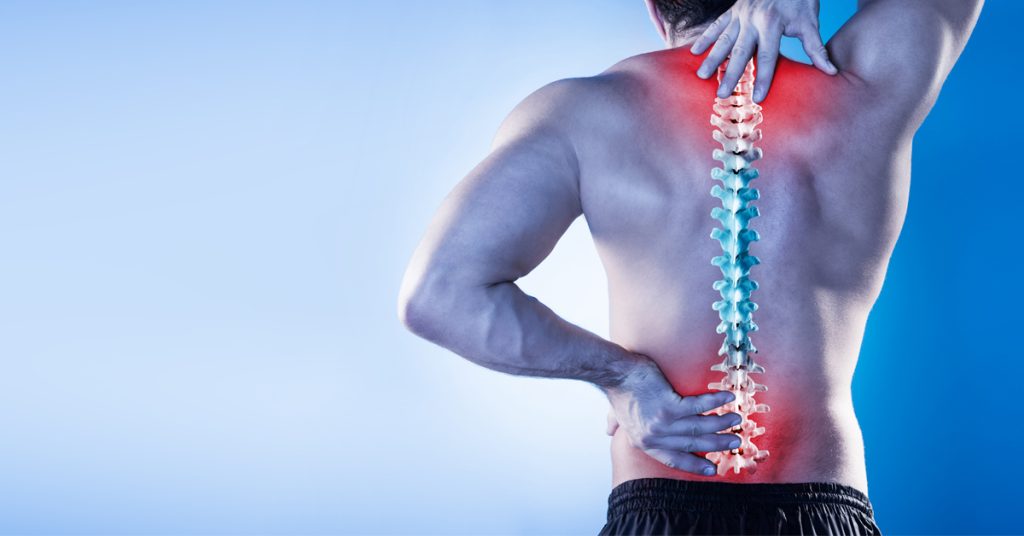
Back pain
Back pain is one of the most common reasons people go to the doctor or miss work, and it is a
leading cause of disability worldwide. Most people have back pain at least once.
Fortunately, you can take measures to prevent or relieve most back pain episodes. If prevention
fails, simple home treatment and proper body mechanics often will heal your back within a few weeks
and keep it functional. Surgery is rarely needed to treat back pain.
Symptoms of Back Pain
Signs and symptoms of back pain can include:
- Muscle ache
- Shooting or stabbing pain
- Pain that radiates down your leg
- Pain that worsens with bending, lifting, standing or walking
- Pain that improves with reclining
When to see a doctor?
Most back pain gradually improves with home treatment and self-care, usually within a few weeks. If
yours doesn’t improve in that time, see your doctor.
In rare cases, back pain can signal a serious medical problem. Seek immediate care if your back
pain: - Causes new bowel or bladder problems
- Is accompanied by fever
- Follows a fall, blow to your back or other injury
Contact a doctor if your back pain :
- Is severe and doesn’t improve with rest
- Spreads down one or both legs, especially if the pain extends below the knee
- Causes weakness, numbness or tingling in one or both legs
- Is accompanied by unexplained weight loss
Also, see your doctor if you start having back pain for the first time after age 50, or if you have
a history of cancer, osteoporosis, steroid use, or excessive drug or alcohol use.
Causes of Back Pain
Back pain that comes on suddenly and lasts no more than six weeks (acute) can be caused by a fall
or heavy lifting. Back pain that lasts more than three months (chronic) is less common than acute
pain.
Back pain often develops without a cause that your doctor can identify with a test or an imaging
study. Conditions commonly linked to back pain include :
Muscle or ligament strain
Repeated heavy lifting or a sudden awkward movement can strain back muscles and spinal ligaments.
If you’re in poor physical condition, constant strain on your back can cause painful muscle spasms.
Bulging or ruptured disks
Disks act as cushions between the bones (vertebrae) in your spine. The soft material inside a disk
can bulge or rupture and press on a nerve. However, you can have a bulging or ruptured disk without
back pain. Disk disease is often found incidentally when you have spine X-rays for some other
reason.
Arthritis
Osteoarthritis can affect the lower back. In some cases, arthritis in the spine can lead to a
narrowing of the space around the spinal cord, a condition called spinal stenosis.
Skeletal irregularities
A condition in which your spine curves to the side (scoliosis) also can lead to back pain, but
generally not until middle age.
Osteoporosis
Your spine’s vertebrae can develop compression fractures if your bones become porous and brittle.
Risk factors of Back Pain
Anyone can develop back pain, even children and teens. These factors might put you at greater risk
of developing back pain:
Age – Back pain is more common as you get older, starting around age 30 or 40.
Lack of exercise – Weak, unused muscles in your back and abdomen might lead to back pain.
Excess weight – Excess body weight puts extra stress on your back. Diseases – Some types of
arthritis and cancer can contribute to back pain. Improper lifting – Using your back instead of
your legs can lead to back pain.
Psychological conditions – People prone to depression and anxiety appear to have a greater risk of
back pain.
Smoking – This reduces blood flow to the lower spine, which can keep your body from delivering
enough nutrients to the disks in your back. Smoking also slows healing.
Prevention of Back Pain
You might avoid back pain or prevent its recurrence by improving your physical condition and
learning and practicing proper body mechanics.
To keep your back healthy and strong:
Exercise
Regular low-impact aerobic activities those that don’t strain or jolt your back can increase
strength and endurance in your back and allow your muscles to function better. Walking and swimming
are good choices. Talk with your doctor about which activities you might try.
Build muscle strength and flexibility
Abdominal and back muscle exercises, which strengthen your core, help condition these muscles so
that they work together like a natural corset for your back. Flexibility in your hips and upper
legs aligns your pelvic bones to improve how your back feels. Your doctor or physical therapist can
tell you which exercises are right for you.
Maintain a healthy weight
Being overweight strains back muscles. If you’re overweight, trimming down can prevent back pain.
Quit smoking
Talk to your doctor about ways to quit.
Avoid movements that twist or strain your back. Use your body properly :
Stand smart
Don’t slouch. Maintain a neutral pelvic position. If you must stand for long periods, place one
foot on a low footstool to take some of the load off your lower back. Alternate feet. Good posture
can reduce the stress on back muscles.
Sit smart
Choose a seat with good lower back support, armrests and a swivel base. Placing a pillow or rolled
towel in the small of your back can maintain its normal curve. Keep your knees and hips level.
Change your position frequently, at least every half-hour.
Lift smart
Avoid heavy lifting, if possible, but if you must lift something heavy, let your legs do the work.
Keep your back straight no twisting and bend only at the knees. Hold the load close to your body.
Find a lifting partner if the object is heavy or awkward.
Beware of Certain Products
Because back pain is so common, numerous products promise prevention or relief. But there’s no
definitive evidence that special shoes, shoe inserts, back supports, specially designed furniture
or stress management programs can help.
In addition, there doesn’t appear to be one type of mattress that’s best for people with back pain.
It’s probably a matter of what feels most comfortable to you.
Diagnosis OF Back Pain
Your doctor will examine your back and assess your ability to sit, stand, walk and lift your legs.
Your doctor might also ask you to rate your pain on a scale of zero to 10 and talk to you about how
well you’re functioning with your pain.
These assessments help determine where the pain comes from, how much you can move before pain
forces you to stop and whether you have muscle spasms. They can also help rule out more -serious
causes of back pain.
If there is reason to suspect that a specific condition is causing your back pain, your doctor
might order one or more tests :
X-ray
These images show the alignment of your bones and whether you have arthritis or broken bones. These
images alone won’t show problems with your spinal cord, muscles, nerves or disks.
MRI or CT scans
These scans generate images that can reveal herniated disks or problems with bones, muscles,
tissue, tendons, nerves, ligaments and blood vessels.
Blood tests
These can help determine whether you have an infection or other condition that might be causing
your pain.
Bone scan
In rare cases, your doctor might use a bone scan to look for bone tumors or compression fractures
caused by osteoporosis.
Nerve studies
Electromyography (EMG) measures the electrical impulses produced by the nerves and the responses of
your muscles. This test can confirm nerve compression caused by herniated disks or narrowing of
your spinal canal (spinal stenosis).
Treatment of Back Pain
Most acute back pain gets better with a few weeks of home treatment. However, everyone is
different, and back pain is a complex condition. For many, the pain doesn’t go away for a long
period, but only a few have persistent, severe pain.
For acute back pain, over-the-counter pain relievers and the use of heat might be all you need. Bed
rest isn’t recommended.
Continue your activities as much as you can tolerate. Try light activity, such as walking and
activities of daily living. Stop activity that increases pain, but don’t avoid activity out of fear
of pain. If home treatments aren’t working after several weeks, your doctor might suggest stronger
medications or other therapies.
Medications for Back Pain
Depending on the type of back pain you have, your doctor might recommend the following :
Over-the-counter (OTC) pain relievers
Nonsteroidal anti-inflammatory drugs (NSAIDs), such as ibuprofen (Advil, Motrin IB, others) or
naproxen sodium (Aleve), might relieve acute back pain. Take these medications only as directed by
your doctor. Overuse can cause serious side effects. If OTC pain relievers don’t relieve your pain,
your doctor might suggest prescription NSAIDs.
Muscle relaxants
If mild to moderate back pain doesn’t improve with OTC pain relievers, your doctor might also
prescribe a muscle relaxant. Muscle relaxants can make you dizzy and sleepy.
Topical pain relievers
These are creams, salves or ointments you rub into your skin at the site of your pain.
Narcotics
Drugs containing opioids, such as oxycodone or hydrocodone, may be used for a short time with close
supervision by your doctor. Opioids don’t work well for chronic pain, so your prescription will
usually provide less than a week’s worth of pills.
Antidepressants
Low doses of certain types of antidepressants particularly tricyclic antidepressants, such as
amitriptyline have been shown to relieve some types of chronic back pain independent of their
effect on depression.
Injections
If other measures don’t relieve your pain, and if your pain radiates down your leg, your doctor may
inject cortisone an anti-inflammatory medication or numbing medication into the space around your
spinal cord (epidural space). A cortisone injection helps decrease inflammation around the nerve
roots, but the pain relief usually lasts less than a few months.
Education
There’s no commonly accepted program to teach people with back pain how to manage the condition
effectively. So education might involve a class, a talk with your doctor, written material or a
video.
Education emphasizes the importance of staying active, reducing stress and worry, and learning ways
to avoid future injury.
Physical therapy and exercise
A physical therapist can apply a variety of treatments, such as heat, ultrasound, electrical
stimulation and muscle-release techniques, to your back muscles and soft tissues to reduce pain.
As pain improves, the therapist can teach you exercises to increase your flexibility, strengthen
your back and abdominal muscles, and improve your posture. Regular use of these techniques can help
keep pain from returning.
Surgery
Few people need surgery for back pain. If you have unrelenting pain associated with radiating leg
pain or progressive muscle weakness caused by nerve compression, you might benefit from surgery.
Otherwise, surgery usually is reserved for pain related to structural problems, such as narrowing
of the spine (spinal stenosis) or a herniated disk, that hasn’t responded to other therapy.
Alternative medicine
A number of alternative treatments might ease symptoms of back pain. Always discuss the benefits
and risks with your doctor before starting a new alternative therapy.
Chiropractic care
A chiropractor hand-manipulates your spine to ease your pain.
Acupuncture
A practitioner of acupuncture inserts sterilized stainless steel needles into the skin at specific
points on the body. Some people with low back pain report that acupuncture helps relieve their
symptoms.
Transcutaneous electrical nerve stimulation (TENS)
A battery-powered device placed on the skin delivers electrical impulses to the painful area.
Studies have shown mixed results as to TENS’ effectiveness.
Massage
If your back pain is caused by tense or overworked muscles, massage might help.
Yoga
There are several types of yoga, a broad discipline that involves practicing specific postures or
poses, breathing exercises, and relaxation techniques. Yoga can stretch and strengthen muscles and
improve posture, although you might need to modify some poses if they aggravate your symptoms.
Visit us on : www.healthalert.co.za Calls us on : +27 82 0941 375
Email us on : info@healthalert.co.za