
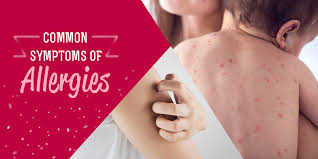
Allergies
Allergies occur when your immune system reacts to a foreign substance such as pollen, bee venom or
pet dander or a food that doesn’t cause a reaction in most people.
Your immune system produces substances known as antibodies. When you have allergies, your immune
system makes antibodies that identify a particular allergen as harmful, even though it isn’t. When
you come into contact with the allergen, your immune system’s reaction can inflame your skin,
sinuses, airways or digestive system.
The severity of allergies varies from person to person and can range from minor irritation to
anaphylaxis a potentially life-threatening emergency. While most allergies can’t be cured,
treatments can help relieve your allergy symptoms.
Symptoms of Allergies
Allergy symptoms, which depend on the substance involved, can affect your airways, sinuses and
nasal passages, skin, and digestive system. Allergic reactions can range from mild to severe. In
some severe cases, allergies can trigger a life-threatening reaction known as anaphylaxis.
Hay fever, also called allergic rhinitis, can cause:
- Sneezing
- Itching of the nose, eyes or roof of the mouth
- Runny, stuffy nose
- Watery, red or swollen eyes (conjunctivitis)
A food allergy can cause: - Tingling in the mouth
- Swelling of the lips, tongue, face or throat
- Hives
- Anaphylaxis
An insect sting allergy can cause: - A large area of swelling (edema) at the sting site
- Itching or hives all over the body
- Cough, chest tightness, wheezing or shortness of breath
- Anaphylaxis
A drug allergy can cause: - Hives
- Itchy skin
- Rash
- Facial swelling
- Wheezing
- Anaphylaxis
Atopic dermatitis, an allergic skin condition also called eczema, can cause skin to:
- Itch
- Redden
- Flake or peel
- Anaphylaxis
Some types of allergies, including allergies to foods and insect stings, can trigger a severe
reaction known as anaphylaxis. A life-threatening medical emergency, anaphylaxis can cause you to
go into shock. Signs and symptoms of anaphylaxis include:
- Loss of consciousness
- A drop in blood pressure
- Severe shortness of breath
- Skin rash
- Lightheadedness
- A rapid, weak pulse
- Nausea and vomiting
When to see a doctor ?
You might see a doctor if you have symptoms, you think are caused by an allergy, and
over-the-counter allergy medications don’t provide enough relief. If you have symptoms after
starting a new medication, call the doctor who prescribed it right away.
For a severe allergic reaction (anaphylaxis), call 01077 or 112 for South Africa and 999 or 112 or
114 for Zimbabwe. If you carry an epinephrine auto-injector (Auvi-Q, EpiPen, others), give yourself
a shot right away.
Even if your symptoms improve after an epinephrine injection, you should go to the emergency
department to make sure symptoms don’t return when the effects of the injection wear off.
If you’ve had a severe allergy attack or any signs and symptoms of anaphylaxis in the past, make an
appointment to see your doctor. Evaluation, diagnosis and long-term management of anaphylaxis are
complicated, so you’ll probably need to see a doctor who specializes in allergies and immunology.
Causes of Allergies
An allergy starts when your immune system mistakes a normally harmless substance for a dangerous
invader. The immune system then produces antibodies that remain on the alert for that particular
allergen. When you’re exposed to the allergen again, these antibodies can release a number of
immune system chemicals, such as histamine, that cause allergy symptoms.
Common allergy triggers include:
- Airborne allergens, such as pollen, animal dander, dust mites and mold
- Certain foods, particularly peanuts, tree nuts, wheat, soy, fish, shellfish, eggs and
milk - Insect stings, such as from a bee or wasp
- Medications, particularly penicillin or penicillin-based antibiotics
- Latex or other substances you touch, which can cause allergic skin reactions
Risk factors to be aware of :
You might be more likely to develop an allergy if you: - Have a family history of asthma or allergies, such as hay fever, hives or eczema
- Are a child
- Have asthma or another allergic condition
Complications
Having an allergy increases your risk of certain other medical problems, including:
- Anaphylaxis
If you have severe allergies, you’re at increased risk of this serious allergy-induced reaction.
Foods, medications and insect stings are the most common triggers of anaphylaxis. - Asthma
If you have an allergy, you’re more likely to have asthma — an immune system reaction that affects
the airways and breathing. In many cases, asthma is triggered by exposure to an allergen in the
environment (allergy-induced asthma). - Sinusitis and infections of the ears or lungs
Your risk of getting these conditions is higher if you have hay fever or asthma.
Prevention of Allergies
Preventing allergic reactions depends on the type of allergy you have. General measures include the
following:
- Avoid known triggers
Even if you’re treating your allergy symptoms, try to avoid triggers. If, for instance, you’re
allergic to pollen, stay inside with windows and doors closed when pollen is high. If you’re
allergic to dust mites, dust and vacuum and wash bedding often. - Keep a diary
When trying to identify what causes or worsens your allergic symptoms, track your activities and
what you eat, when symptoms occur and what seems to help. This may help you and your doctor
identify triggers. - Wear a medical alert bracelet
If you’ve had a severe allergic reaction, a medical alert bracelet (or necklace) lets others know
that you have a serious allergy in case you have a reaction and you’re unable to communicate.
Diagnosis of Allergies
To evaluate whether you have an allergy, your doctor will likely to perform some tests :
Skin test.
A doctor or nurse will prick your skin and expose you to small amounts of the proteins found in
potential allergens. If you’re allergic, you’ll likely develop a raised bump (hive) at the test
location on your skin.
Blood test.
Specific IgE (sIgE) blood testing, commonly called radioallergosorbent test (RAST) or ImmunoCAP
testing, measures the amount of allergy-causing antibodies in your bloodstream, known as
immunoglobulin E (IgE) antibodies. A blood sample is sent to a medical laboratory, where it can be
tested for evidence of sensitivity to possible allergens.
If your doctor suspects your problems are caused by something other than an allergy, other tests
might help identify or rule out other medical problems.
Treatment for Allergies
Allergy treatments include :
Allergen avoidance.
Your doctor will help you take steps to identify and avoid your allergy triggers. This is generally
the most important step in preventing allergic reactions and reducing symptoms.
Medications.
Depending on your allergy, medications can help reduce your immune system reaction and ease
symptoms. Your doctor might suggest over-the-counter or prescription medication in the form of
pills or liquid, nasal sprays, or eyedrops.
Immunotherapy.
For severe allergies or allergies not completely relieved by other treatment, your doctor might
recommend allergen immunotherapy. This treatment involves a series of injections of purified
allergen extracts, usually given over a period of a few years.
Another form of immunotherapy is a tablet that’s placed under the tongue (sublingual) until it
dissolves. Sublingual drugs are used to treat some pollen allergies.
Emergency epinephrine.
If you have a severe allergy, you might need to carry an emergency epinephrine shot at all time s.
Given for severe allergic reactions, an epinephrine shot (Auvi-Q, EpiPen, others) can reduce
symptoms until you get emergency treatment.
Lifestyle and home remedies
Some allergy symptoms improve with home treatment.
Sinus congestion and hay fever symptoms.
These often improve with saline nasal irrigation rinsing out the sinuses with a salt and water
solution. You can use a neti pot or a specially designed squeeze bottle to flush out thickened
mucus and irritants from your nose. However, improper use of a neti pot or other device can lead to
infection.
Household airborne allergy symptoms.
Reduce your exposure to dust mites or pet dander by frequently washing bedding and stuffed toys in
hot water, maintaining low humidity, regularly using a vacuum with a fine filter such as a
high-efficiency particulate air (HEPA) filter and replacing carpeting with hard flooring.
Mold allergy symptoms.
Reduce moisture in damp areas, such as your bath and kitchen, by using ventilation fans and
dehumidifiers. Fix leaks inside and outside your home
Visit us on : www.healthalert.co.za Calls us on : +27 82 0941 375
Email us on : info@healthalert.co.za