
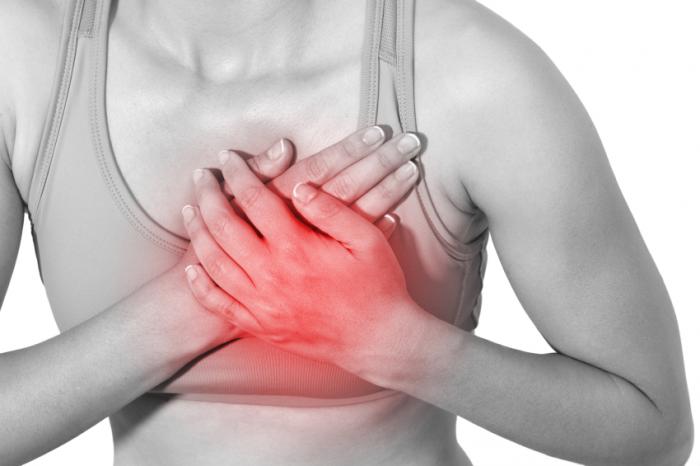
Breast pain
Breast pain a common complaint among women can include breast tenderness, sharp burning pain or
tightness in your breast tissue. The pain may be constant or it may occur only occasionally.
Breast pain can range from mild to severe. It may occur:
Just a few days a month, in the two to three days leading up to your period. This normal, mild-to-
moderate pain affects both breasts.
A week or longer each month, starting before your period and sometimes continuing through your
menstrual cycle. The pain may be moderate or severe, and affects both breasts.
Throughout the month, not related to your menstrual cycle.
Postmenopausal women sometimes have breast pain, but breast pain is more common in younger women
who haven’t completed menopause.
Most times, breast pain signals a noncancerous (benign) breast condition and rarely indicates
breast cancer. Still, unexplained breast pain that doesn’t go away after one or two menstrual
cycles or that persists after menopause needs to be evaluated by your doctor.
Symptoms Breast Pain
Most cases of breast pain are classified as either cyclic or noncyclic. Each type of breast pain
has distinct characteristics.
Breast pain characteristics
- Cyclic breast pain/Noncyclic breast pain
- Clearly related to the menstrual cycle/Unrelated to the menstrual cycle
- Described as dull, heavy or aching/Described as tight, burning or sore
- Often accompanied by breast swelling or lumpiness/Constant or intermittent
Usually affects both breasts, particularly the upper, outer portions, and can radiate to the
underarm
Usually affects one breast, in a localized area, but may spread more diffusely across the breast
Intensifies during the two weeks leading up to the start of your period, then eases up afterward
Most likely to affect women after menopause
More likely to affect women in their 20s and 30s before menopause as well as women in their 40s who
are transitioning to menopause
Extramammary breast pain
The term “extramammary” means “outside the breast.” Extramammary breast pain feels like it starts
in the breast tissue, but its source is actually somewhere else. Pulling a muscle in your chest,
for example, can cause pain in your chest wall or rib cage that spreads (radiates) to your breast.
When to see a doctor?
Make an appointment with your doctor if breast pain:
Continues daily for more than a couple of weeks Occurs in one specific area of your breast Seems to
be getting worse over time
Interferes with daily activities
Although breast cancer risk is low in women whose main symptom is breast pain, if your doctor
recommends an evaluation, it’s important to follow through.
Causes of Breast Pain
Sometimes, it’s not possible to identify the exact cause of breast pain. Contributing factors may
include one or more of the following:
Reproductive hormones
Cyclic breast pain appears to have a strong link to hormones and your menstrual cycle. Cyclic
breast pain often decreases or disappears with pregnancy or menopause.
Breast structure
Noncyclic breast pain often results from changes that occur in the milk ducts or milk glands. This
can result in the development of breast cysts. Breast trauma, prior breast surgery or other factors
localized to the breast can lead to breast pain. Breast pain may also start outside the breast — in
the chest wall, muscles, joints or heart, for example — and radiate to the breast.
Fatty acid imbalance
An imbalance of fatty acids within the cells may affect the sensitivity of breast tissue to
circulating hormones.
Medication use
Certain hormonal medications, including some infertility treatments and oral birth control pills,
may be associated with breast pain. Also, breast tenderness is a possible side effect of estrogen
and progesterone hormone therapies that are used after menopause. Breast pain may be associated
with certain antidepressants, including selective serotonin reuptake inhibitor (SSRI)
antidepressants.
Breast size
Women with large breasts may have noncyclic breast pain related to the size of their breasts. Neck,
shoulder and back pain may accompany breast pain due to large breasts.
Breast surgery
Breast pain associated with breast surgery and scar formation can sometimes linger after incisions
have healed.
Diagnosis for Breast Pain
Tests to evaluate your condition may include:
Clinical breast exam
Your doctor checks for changes in your breasts, examining your breasts and the lymph nodes in your
lower neck and underarm. Your doctor will likely listen to your heart and lungs and check your
chest and abdomen to determine whether the pain could be related to another condition. If your
medical history and the breast and physical exam reveal nothing unusual, you may not need
additional tests.
Mammogram
If your doctor feels a breast lump or unusual thickening, or detects a focused area of pain in your
breast tissue, you’ll need an X-ray exam of your breast that evaluates the area of concern found
during the breast exam (diagnostic mammogram).
Ultrasound
An ultrasound exam uses sound waves to produce images of your breasts, and it’s often done along
with a mammogram. You might need an ultrasound to evaluate a focused area of pain even if the
mammogram appears normal.
Breast biopsy
Suspicious breast lumps, areas of thickening or unusual areas seen during imaging exams may require
a biopsy before your doctor can make a diagnosis. During a biopsy, your doctor obtains a small
sample of breast tissue from the area in question and sends it for lab analysis.
Treatment for Breast Pain
For many women, breast pain resolves on its own over time. You may not need any treatment. If you
do require treatment, your doctor might recommend that you:
Eliminate an underlying cause or aggravating factor. This may involve a simple adjustment, such as
wearing a bra with extra support.
Use a topical nonsteroidal anti-inflammatory (NSAID) medication.
You may need to use NSAIDs when your pain is intense. Your doctor may recommend you apply an NSAID
cream directly to the area where you feel pain.
Adjust birth control pills
If you take birth control pills, skipping the pill-free week or switching birth control methods may
help breast pain symptoms. But don’t try this without your doctor’s advice.
Reduce the dose of menopausal hormone therapy
You might consider lowering the dose of menopausal hormone therapy or stopping it entirely.
Take a prescription medication
Danazol is the only prescription medication approved by the Food and Drug Administration for
treating breast pain and tenderness. However, danazol carries the risk of potentially severe side
effects, such as acne, weight gain and voice changes, which limit its use.
Tamoxifen, a prescription medication for breast cancer treatment and prevention, may be recommended for some
women, but this drug also carries the potential for side effects that may be more bothersome than
the breast pain itself.
Lifestyle and home remedies
Even though there is little research to show the effectiveness of these self -care remedies, some
may be worth a try:
Use hot or cold compresses on your breasts.
Wear a firm support bra, fitted by a professional if possible.
Wear a sports bra during exercise, especially when your breasts may be more sensitive.
Experiment with relaxation therapy, which can help control the high levels of anxiety associated
with severe breast pain.
Limit or eliminate caffeine, a dietary change some women find helpful, although medical studies of caffeine’s effect on breast pain and other premenstrual symptoms have been inconclusive.
Follow a low-fat diet and eat more complex carbohydrates, a strategy that’s helped some women with
breast pain in observational studies.
Consider using an over-the-counter pain reliever, such as acetaminophen or ibuprofen (Advil, Motrin
IB, others) but ask your doctor how much to take, as long-term use may increase your risk of liver
problems and other side effects.
Keep a journal, noting when you experience breast pain and other symptoms, to determine if your
pain is cyclic or noncyclic.
Alternative medicine
Vitamins and dietary supplements may lessen breast pain symptoms and severity for some women. Ask
your doctor if one of these might help you and ask about doses and any possible side effects:
Evening primrose oil
This supplement may change the balance of fatty acids in your cells, which may reduce breast pain.
Vitamin E
Early studies showed a possible beneficial effect of vitamin E on breast pain in premenstrual women
who experience breast pain that fluctuates during the menstrual cycle. In one study, 200 IU of
vitamin E taken twice daily for two months improved symptoms in women with cyclic breast pain.
There was no additional benefit after four months.
For adults older than 18 years, pregnant women, and breastfeeding women, the maximum dose of
vitamin E is 1,000 milligrams daily (or 1,500 IU).
If you try a supplement for breast pain, stop taking it if you don’t notice any improvement in your
breast pain after a few months. Try just one supplement at a time so that you can clearly determine
which one helps alleviate the pain or not.
Visit us on : www.healthalert.co.za Calls us on : +27 82 0941 375
Email us on : info@healthalert.co.za