
Chickenpox
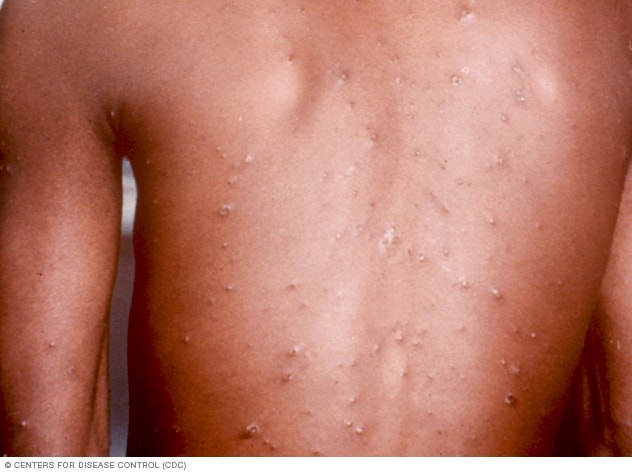
Chickenpox is an infection caused by the varicella-zoster virus. It causes an itchy rash with
small, fluid- filled blisters. Chickenpox is highly contagious to people who haven’t had the
disease or been vaccinated against it. Today, a vaccine is available that protects children against
chickenpox. Routine vaccination is recommended by the Centers for Disease Control and Prevention
(CDC).
The chickenpox vaccine is a safe, effective way to prevent chickenpox and its possible
complications.
Symptoms of Chickenpox
The itchy blister rash caused by chickenpox infection appears 10 to 21 days after exposure to the
virus and usually lasts about five to 10 days. Other signs and symptoms, which may appear one to
two days before the rash, include:
- Fever
- Loss of appetite
- Headache
- Tiredness and a general feeling of being unwell (malaise)
Once the chickenpox rash appears, it goes through three phases:
- Raised pink or red bumps (papules), which break out over several days
- Small fluid-filled blisters (vesicles), which form in about one day and then break and
leak - Crusts and scabs, which cover the broken blisters and take several more days to he al
New bumps continue to appear for several days, so you may have all three stages of the rash bumps,
blisters and scabbed lesions at the same time. You can spread the virus to other people for up to
48 hours before the rash appears, and the virus remains contagious until all broken blisters have
crusted over.
The disease is generally mild in healthy children. In severe cases, the rash can cover the entire
body, and lesions may form in the throat, eyes, and mucous membranes of the urethra, anus and vagina.
When to see a doctor?
If you think you or your child might have chickenpox, consult your doctor. He or she usually can
diagnose chickenpox by examining the rash and considering other symptoms. Your doctor can also
prescribe medications to lessen the severity of chickenpox and treat complications, if necessary.
To avoid infecting others in the waiting room, call ahead for an appointment and mention that you
think you or your child may have chickenpox.
Also, let your doctor know if:
The rash spreads to one or both eyes.
The rash gets very red, warm or tender. This could indicate a secondary bacterial skin infection.
The rash is accompanied by dizziness, disorientation, rapid heartbeat, shortness of breath,
tremors, loss of muscle coordination, worsening cough, vomiting, stiff neck or a fever higher than
102 F (38.9 C).
Anyone in the household has a problem with his or her immune system or is younger than 6 months.
Causes of Chickenpox
Chickenpox infection is caused by a virus. It can spread through direct contact with the rash. It
can also spread when a person with the chickenpox coughs or sneezes and you inhale the air
droplets.
Risk factors of Chickenpox
Your risk of becoming infected with the varicella-zoster virus that causes chickenpox is higher if
you haven’t already had chickenpox or if you haven’t had the chickenpox vaccine. It’s especially
important for people who work in child care or school settings to be vaccinated.
Most people who have had chickenpox or have been vaccinated against chickenpox are immune to
chickenpox. If you’ve been vaccinated and still get chickenpox, symptoms are often milder, with
fewer blisters and mild or no fever. A few people can get chickenpox more than once, but this is
rare.
Complications of Chickenpox
Chickenpox is normally a mild disease. But it can be serious and can lead to complications
including:
- Bacterial infections of the skin, soft tissues, bones, joints or bloodstream (sepsis)
- Dehydration
- Pneumonia
- Inflammation of the brain (encephalitis)
- Toxic shock syndrome
- Reye’s syndrome in children and teenagers who take aspirin during chickenpox
- Death
Who’s at risk?
People who are at higher risk of chickenpox complications include:
- Newborns and infants whose mothers never had chickenpox or the vaccine
- Adolescents and adults
- Pregnant women who haven’t had chickenpox
- People who smoke
- People whose immune systems are weakened by medication, such as chemotherapy, or by a disease,
such as cancer or HIV - People who are taking steroid medications for another disease or condition, such as
asthma
Chickenpox and pregnancy
Low birth weight and limb abnormalities are more common among babies born to women who are infected
with chickenpox early in their pregnancy. When a mother is infected with chickenpox in the week
before birth or within a couple of days after giving birth, her baby has a higher risk of
developing a serious, life-threatening infection.
If you’re pregnant and not immune to chickenpox, talk to your doctor about the risks to you and
your unborn child.
Chickenpox and shingles
If you’ve had chickenpox, you’re at risk of a complication called shingles. The varicella-zoster
virus remains in your nerve cells after the skin infection has healed. Many years later, the virus
can reactivate and resurface as shingles a painful cluster of short-lived blisters. The virus is
more likely to reappear in older adults and people who have weakened immune systems.
The pain of shingles can persist long after the blisters disappear. This is called postherpetic
neuralgia and can be severe.
Two shingles vaccines (Zostavax and Shingrix) are available for adults who have had chickenpox.
Shingrix is approved and recommended for people age 50 and older, including those who’ve previously
received Zostavax. Zostavax isn’t recommended until age 60. Shingrix is preferred over Zostavax.
Prevention of Chickenpox
The chickenpox (varicella) vaccine is the best way to prevent chickenpox. Experts from the Centers
for Disease Control and Prevention (CDC) estimate that the vaccine provides complete protection
from the virus for nearly 98 percent of people who receive both of the recommended doses. When the vaccine
doesn’t provide complete protection, it significantly lessens the severity of chickenpox.
The chickenpox vaccine (Varivax) is recommended for:
Young children
In the Africa, children should receive two doses of the varicella vaccine the first between ages 12
and 15 months and the second between ages 4 and 6 years as part of the routine childhood
vaccination schedule.
The vaccine can be combined with the measles, mumps and rubella vaccine, but for some children
between the ages of 12 and 23 months, the combination may increase the risk of fever and seizure
from the vaccine. Discuss the pros and cons of combining the vaccines with your child’s doctor.
Unvaccinated older children. Children ages 7 to 12 years who haven’t been vaccinated should receive
two catch-up doses of the varicella vaccine, given at least three months apart. Children age 13 or
older who haven’t been vaccinated should also receive two catch-up doses of the vaccine, given at
least four weeks apart.
Unvaccinated adults who’ve never had chickenpox and are at high risk of exposure. This includes
health care workers, teachers, child care employees, international travelers, military personnel,
adults who live with young children and all women of childbearing age.
Adults who’ve never had chickenpox or been vaccinated usually receive two doses of the vaccine,
four to eight weeks apart. If you don’t remember whether you’ve had chickenpox or the vaccine, a
blood test can determine your immunity.
The chickenpox vaccine isn’t approved for:
Pregnant women
People who have weakened immune systems, such as those who are infected with HIV, or people who are
taking immune-suppressing medications
People who are allergic to gelatin or the antibiotic neomycin
Talk to your doctor if you’re unsure about your need for the vaccine. If you’re planning on
becoming pregnant, consult with your doctor to make sure you’re up to date on your vaccinations
before conceiving a child.
Is it safe and effective?
Parents typically wonder whether vaccines are safe. Since the chickenpox vaccine became available,
studies have consistently found it safe and effective. Side effects are generally mild and include
redness, soreness, swelling and, rarely, small bumps at the site of the shot.
Diagnosis for Chickenpox
Doctors generally diagnose chickenpox based on the rash.
If there’s any doubt about the diagnosis, chickenpox can be confirmed with laboratory tests,
including blood tests or a culture of lesion samples.
Treatment of Chickenpox
In otherwise healthy children, chickenpox typically needs no medical treatment. Your doctor may
prescribe an antihistamine to relieve itching. But for the most part, the disease is allowed to run
its course.
For people who are at high risk of complications from chickenpox, doctors sometimes prescribe
medications to shorten the length of the infection and to help reduce the risk of complications.
If you or your child are at high risk of complications, your doctor may suggest an antiviral drug
such as acyclovir (Zovirax, Sitavig) or another drug called immune globulin intravenous (Privigen).
These medications may lessen the severity of chickenpox when given within 24 hours after the rash
first appears.
Other antiviral drugs, such as valacyclovir (Valtrex) and famciclovir, also may lessen the severity
of the disease, but may not be approved or appropriate for everyone. In some instances, your doctor
may recommend getting the chickenpox vaccine after you’ve been exposed to the virus. This can
prevent the disease or lessen its severity.
Treating complications
If complications develop, your doctor will determine the appropriate treatment. He or she may
prescribe antibiotics for skin infections and pneumonia. Brain inflammation (encephalitis) is
usually treated with antiviral drugs. Hospitalization may be necessary.
Lifestyle and home remedies
To help ease the symptoms of an uncomplicated case of chickenpox, follow these self -care measures.
Avoid scratching
Scratching can cause scarring, slow healing and increase the risk that the sores will become
infected. If your child can’t stop scratching:
Put gloves on his or her hands, especially at night Trim his or her fingernails
Relieve the itch and other symptoms
The chickenpox rash can be very itchy, and broken vesicles sometimes sting. These discomforts,
along with fever, headache and fatigue, can make anyone miserable. For relief, try:
A cool bath with added baking soda, aluminum acetate , uncooked oatmeal or
colloidal oatmeal a finely ground oatmeal that is made for soaking.
Calamine lotion dabbed on the spots.
A soft, bland diet if chickenpox sores develop in the mouth.
Antihistamines such as diphenhydramine (Benadryl, others) for itching. Check with your doctor to
make sure your child can safely take antihistamines.
Acetaminophen (Tylenol, others) for a mild fever.
If fever lasts longer than four days and is higher than 102, call your doctor. And don’t give
aspirin to children and teenagers who have chickenpox because it can lead to a serious condition
called Reye’s syndrome.
Talk with your doctor before giving any type of nonsteroidal anti-inflammatory drug (NSAID) such as
ibuprofen (Advil, Motrin IB, others) to someone who has chickenpox. Some studies suggest this type
of medication may lead to skin infections or tissue damage.
Visit us on : www.healthalert.co.za Calls us on : +27 82 0941 375
Email us on : info@healthalert.co.za