
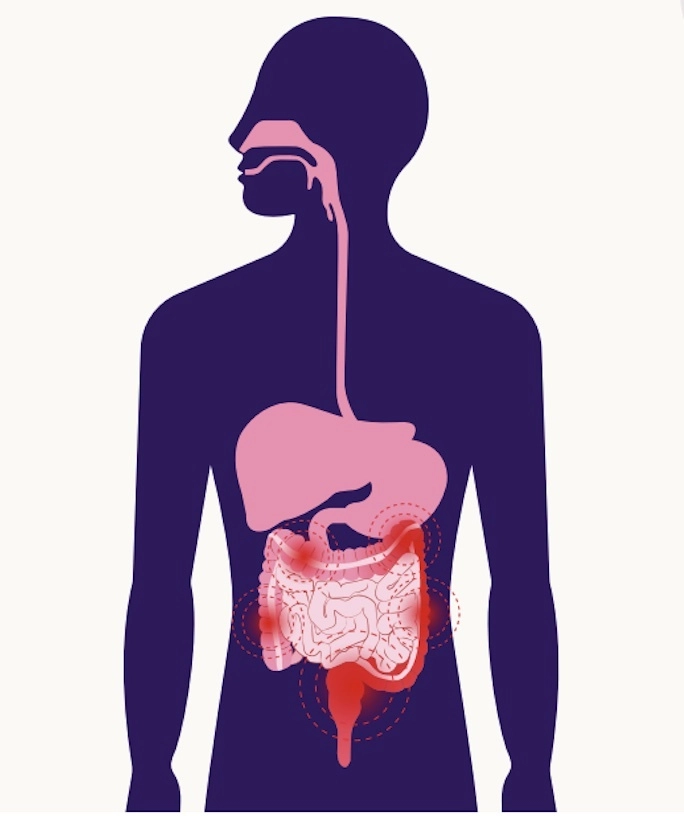
Ulcerative colitis
Ulcerative colitis is an inflammatory bowel disease (IBD) that causes long-lasting inflammation and ulcers (sores) in your digestive tract. Ulcerative colitis affects the innermost lining of your large intestine (colon) and rectum. Symptoms usually develop over time, rather than suddenly.
Ulcerative colitis can be debilitating and can sometimes lead to life-threatening complications. While it has no known cure, treatment can greatly reduce signs and symptoms of the disease and even bring about long-term remission.
Causes of Ulcerative colitis
The exact cause of ulcerative colitis remains unknown. Previously, diet and stress were suspected, but now doctors know that these factors may aggravate but don’t cause ulcerative colitis.
One possible cause is an immune system malfunction. When your immune system tries to fight off an invading virus or bacterium, an abnormal immune response causes the immune system to attack the cells in the digestive tract, too.
Heredity also seems to play a role in that ulcerative colitis is more common in people who have family members with the disease. However, most people with ulcerative colitis don’t have this family history.
Symptoms of Ulcerative colitis
Ulcerative colitis symptoms can vary, depending on the severity of inflammation and where it occurs. Signs and symptoms may include:
- Diarrhea, often with blood or pus
- Abdominal pain and cramping
- Rectal pain
- Rectal bleeding passing small amount of blood with stool
- Urgency to defecate
- Inability to defecate despite urgency
- Weight loss
- Fatigue
- Fever
- In children, failure to grow
N.B – Most people with ulcerative colitis have mild to moderate symptoms. The course of ulcerative colitis may vary, with some people having long periods of remission.
Types of Ulcerative colitis
Doctors often classify ulcerative colitis according to its location. Types of ulcerative colitis include:
Ulcerative proctitis.
Inflammation is confined to the area closest to the anus (rectum), and rectal bleeding may be the only sign of the disease. This form of ulcerative colitis tends to be the mildest.
Proctosigmoiditis.
Inflammation involves the rectum and sigmoid colon (lower end of the colon). Signs and symptoms include bloody diarrhea, abdominal cramps and pain, and an inability to move the bowels in spite of the urge to do so (tenesmus).
Left-sided colitis.
Inflammation extends from the rectum up through the sigmoid and descending colon. Signs and symptoms include bloody diarrhea, abdominal cramping and pain on the left side, and unintended weight loss.
Pancolitis.
Pancolitis often affects the entire colon and causes bouts of bloody diarrhea that may be severe, abdominal cramps and pain, fatigue, and significant weight loss.
Acute severe ulcerative colitis.
This rare form of colitis affects the entire colon and causes severe pain, profuse diarrhea, bleeding, fever and inability to eat.
When to see a doctor
See your doctor if you experience a persistent change in your bowel habits or if you have signs and symptoms such as:
- Abdominal pain
- Blood in your stool
- Ongoing diarrhea that doesn’t respond to over-the-counter medications
- Diarrhea that awakens you from sleep
- An unexplained fever lasting more than a day or two
Although ulcerative colitis usually isn’t fatal, it’s a serious disease that, in some cases, may cause lifethreatening complications.
Risk factors
Ulcerative colitis affects about the same number of women and men. Risk factors may include:
Age.
Ulcerative colitis usually begins before the age of 30. But, it can occur at any age, and some people may not develop the disease until after age 60.
Race or ethnicity.
Although whites have the highest risk of the disease, it can occur in any race. If you’re of Ashkenazi Jewish descent, your risk is even higher.
Family history.
You’re at higher risk if you have a close relative, such as a parent, sibling or child, with the disease.
Complications
Possible complications of ulcerative colitis include:
- Severe bleeding
- A hole in the colon (perforated colon)
- Severe dehydration
- Liver disease (rare)
- Bone loss (osteoporosis)
- Inflammation of your skin, joints and eyes
- An increased risk of colon cancer
- A rapidly swelling colon (toxic megacolon)
- Increased risk of blood clots in veins and arteries
Diagnosis
Your doctor will likely diagnose ulcerative colitis after ruling out other possible causes for your signs and symptoms. To help confirm a diagnosis of ulcerative colitis, you may have one or more of the following tests and procedures:
Blood tests.
Your doctor may suggest blood tests to check for anemia a condition in which there aren’t enough red blood cells to carry adequate oxygen to your tissues or to check for signs of infection.
Stool sample.
White blood cells in your stool can indicate ulcerative colitis. A stool sample can also help rule out other disorders, such as infections caused by bacteria, viruses and parasites.
Colonoscopy.
This exam allows your doctor to view your entire colon using a thin, flexible, lighted tube with an attached camera. During the procedure, your doctor can also take small samples of tissue (biopsy) for laboratory analysis. Sometimes a tissue sample can help confirm a diagnosis.
Flexible sigmoidoscopy.
Your doctor uses a slender, flexible, lighted tube to examine the rectum and sigmoid, the last portion of your colon. If your colon is severely inflamed, your doctor may perform this test instead of a full colonoscopy.
X-ray.
If you have severe symptoms, your doctor may use a standard X-ray of your abdominal area to rule out serious complications, such as a perforated colon.
CT scan.
A CT scan of your abdomen or pelvis may be performed if your doctor suspects a complication from ulcerative colitis. A CT scan may also reveal how much of the colon is inflamed.
Computerized tomography (CT) enterography and magnetic resonance (MR) enterography. Your doctor may recommend one of these noninvasive tests if he or she wants to exclude any inflammation in the small intestine. These tests are more sensitive for finding inflammation in the bowel than are conventional imaging tests. MR enterography is a radiation-free alternative.
Treatment
Ulcerative colitis treatment usually involves either drug therapy or surgery.
Several categories of drugs may be effective in treating ulcerative colitis.
The type you take will depend on the severity of your condition and location. The drugs that work well for some people may not work for others, so it may take time to find a medication that helps you.
5-aminosalicylic acid (5-ASA)
5-aminosalicylic acid (5-ASA) is often the first step in the treatment of ulcerative colitis. Examples of this type of medication include sulfasalazine (Azulfidine), mesalamine (Asacol HD, Delzicol, others), balsalazide (Colazal) and olsalazine (Dipentum). Which one you take, and whether it is taken by mouth or as an enema or suppository, depends on the area of your colon that’s affected.
Corticosteroids
These drugs, which include prednisone and budesonide (Uceris), are generally reserved for moderate to severe ulcerative colitis. Due to the side effects, they are not usually given long term.
Immunomodulator drugs
These drugs also reduce inflammation, but they do so by suppressing the immune system response that starts the process of inflammation. Examples include:
Azathioprine (Azasan, Imuran) and mercaptopurine (Purinethol, Purixan). Taking these medications requires that you follow up closely with your doctor and have your blood checked regularly to look for side effects, including effects on the liver.
Cyclosporine (Gengraf, Neoral, Sandimmune). This drug may be used for people who haven’t responded well to other medications and is not for long-term use.
Tofacitinib (Xeljanz). This drug has recently been approved for treatment of conditions such as ulcerative colitis, rheumatoid arthritis or psoriatic arthritis.
Biologics
Types of biologics used to treat ulcerative colitis include:
Infliximab (Remicade), adalimumab (Humira) and golimumab (Simponi).
These drugs are called tumor necrosis factor (TNF) inhibitors and work by neutralizing a protein produced by your immune system.
Vedolizumab (Entyvio).
This gut-specific medication works by blocking inflammatory cells from getting to the site of inflammation.
Other medications
You may need additional medications to manage specific symptoms of ulcerative colitis. For severe diarrhea, loperamide (Imodium A-D) may be effective. However, use anti-diarrheal medications with great caution and only after talking with your doctor.
Surgery
Surgery can often eliminate ulcerative colitis. But that usually means removing your entire colon and rectum (proctocolectomy).
In most cases, this involves a procedure called ileal pouch anal anastomosis. This procedure eliminates the need to wear a bag to collect stool. Your surgeon constructs a pouch from the end of your small intestine. The pouch is then attached directly to your anus, allowing you to expel waste relatively normally.
In some cases a pouch is not possible. Instead, surgeons create a permanent opening in your abdomen (ileal stoma) through which stool is passed for collection in an attached bag.
Cancer surveillance
You will need more-frequent screening for colon cancer because of your increased risk. The recommended schedule will depend on the location of your disease and how long you have had it.
If your disease involves more than your rectum, you will require a surveillance colonoscopy every one to two years. You will need a surveillance colonoscopy beginning as soon as eight years after diagnosis if the majority of your colon is involved, or 15 years if only the left side of your colon is involved.
Lifestyle and home remedies
Sometimes you may feel helpless when facing ulcerative colitis. But changes in your diet and lifestyle may help control your symptoms and lengthen the time between flare-ups.
There’s no firm evidence that what you eat actually causes inflammatory bowel disease. But certain foods and beverages can aggravate your signs and symptoms, especially during a flare-up.
It can be helpful to keep a food diary to keep track of what you’re eating, as well as how you feel. If you discover that some foods are causing your symptoms to flare, you can try eliminating them. Here are some suggestions that may help:
Foods to limit or avoid
Limit dairy products.
Many people with inflammatory bowel disease find that problems such as diarrhea, abdominal pain and gas improve by limiting or eliminating dairy products. You may be lactose intolerant that is, your body can’t digest the milk sugar (lactose) in dairy foods. Using an enzyme product such as Lactaid may help as well.
Limit fiber, if it’s a problem food. If you have inflammatory bowel disease, high-fiber foods, such as fresh fruits and vegetables and whole grains, may make your symptoms worse. If raw fruits and vegetables bother you, try steaming, baking or stewing them.
In general, you may have more problems with foods in the cabbage family, such as broccoli and cauliflower, and nuts, seeds, corn and popcorn.
Avoid other problem foods.
Spicy foods, alcohol and caffeine may make your signs and symptoms worse.
Other dietary measures
Eat small meals.
You may find you feel better eating five or six small meals a day rather than two or three larger ones.
Drink plenty of liquids.
Try to drink plenty of fluids daily. Water is best. Alcohol and beverages that contain caffeine stimulate your intestines and can make diarrhea worse, while carbonated drinks frequently produce gas.
Talk to a dietitian.
If you begin to lose weight or your diet has become very limited, talk to a registered dietitian.
Stress
Although stress doesn’t cause inflammatory bowel disease, it can make your signs and symptoms worse and may trigger flare-ups.
To help control stress, try:
Exercise.
Even mild exercise can help reduce stress, relieve depression and normalize bowel function. Talk to your doctor about an exercise plan that’s right for you.
Biofeedback.
This stress-reduction technique helps you reduce muscle tension and slow your heart rate with the help of a feedback machine. The goal is to help you enter a relaxed state so that you can cope more easily with stress.
Regular relaxation and breathing exercises.
An effective way to cope with stress is to perform relaxation and breathing exercises. You can take classes in yoga and meditation or practice at home using books, CDs or DVDs.
Alternative medicine
Many people with digestive disorders have used some form of complementary and alternative (CAM) therapy.
Some commonly used therapies include:
Herbal and nutritional supplements.
The majority of alternative therapies aren’t regulated by the FDA. Manufacturers can claim that their therapies are safe and effective but don’t need to prove it. What’s more, even natural herbs and supplements can have side effects and cause dangerous interactions. Tell your doctor if you decide to try any herbal supplement.
Probiotics.
Researchers suspect that adding more of the beneficial bacteria (probiotics) that are normally found in the digestive tract might help combat the disease. Although research is limited, there is some evidence that adding probiotics along with other medications may be helpful, but this has not been proved.
Fish oil.
Fish oil acts as an anti-inflammatory, and there is some evidence that adding fish oil to aminosalicylates may be helpful, but this has not been proved.
Aloe vera.
Aloe vera gel may have an anti-inflammatory effect for people with ulcerative colitis, but it can also cause diarrhea.
Acupuncture.
Only one clinical trial has been conducted regarding its benefit. The procedure involves the insertion of fine needles into the skin, which may stimulate the release of the body’s natural painkillers.
Turmeric.
Curcumin, a compound found in the spice turmeric, has been combined with standard ulcerative colitis therapies in clinical trials. There is some evidence of benefit, but more research is needed.
Call us on : +27 82 0941 375
Email : info@healthalert.co.za
Website : www.healthalert.co.za