
Angina
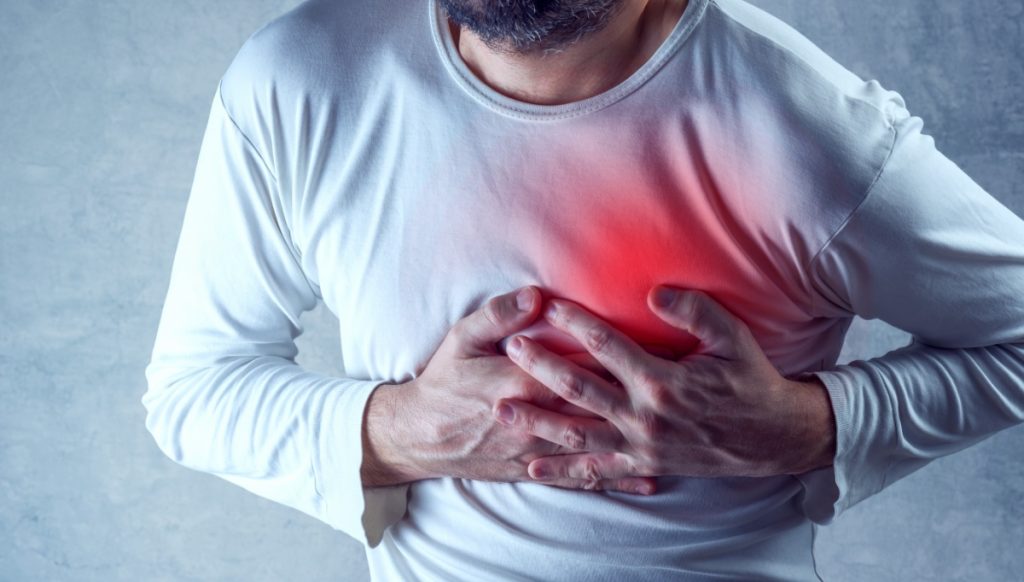
Angina is a type of chest pain caused by reduced blood flow to the heart. Angina is a symptom of
coronary artery disease.
Angina, which may also be called angina pectoris, is often described as squeezing, pressure,
heaviness, tightness or pain in your chest. Some people with angina symptoms describe angina as
feeling like a vise is squeezing their chest or feeling like a heavy weight has been placed on
their chest. Angina may be a new pain that needs evaluation by a doctor, or recurring pain that
goes away with treatment.
Although angina is relatively common, it can still be hard to distinguish from other types of chest
pain, such as the pain or discomfort of indigestion. If you have unexplained chest pain, seek
medical attention right away.
|
Symptoms of Angina
Angina symptoms include:
- Chest pain or discomfort, possibly described as pressure, squeezing, burning or
fullness - Pain in your arms, neck, jaw, shoulder or back accompanying chest pain
- Nausea
- Fatigue
- Shortness of breath
- Sweating
- Dizziness
These symptoms need to be evaluated immediately by a doctor who can determine whether you have
stable angina, or unstable angina that may indicate a possible heart attack.
Stable angina is the most common form of angina. It usually happens when you exert yourself and
goes away with rest. For example, pain that comes on when you’re walking uphill or in the cold
weather is often angina.
Characteristics of stable angina
Develops when your heart works harder, such as when you exercise or climb stairs
Can usually be predicted and the pain is usually similar to previous types of chest pain you’ve had
Lasts a short time, perhaps five minutes or less
Disappears sooner if you rest or use your angina medication
The severity, duration and type of angina can vary. New or different symptoms may signal a more
dangerous form of angina (unstable angina) or a heart attack.
Characteristics of unstable angina (a medical emergency)
Occurs even at rest
Is a change in your usual pattern of angina Is unexpected
Is usually more severe and lasts longer than stable angina, maybe 30 minutes or longer May not
disappear with rest or use of angina medication
Might signal a heart attack
There’s another type of angina, called variant angina or Prinzmetal’s angina. This type of angina
is rarer. It’s caused by a spasm in your heart’s arteries that temporarily reduces blood flow.
Characteristics of variant angina (Prinzmetal’s angina)
Usually happens when you’re resting Is often severe
May be relieved by angina medication
Angina in women
A woman’s angina symptoms can be different from the classic angina symptoms. These differences may
lead to delays in seeking treatment. For example, chest pain is a common symptom in women with
angina, but it may not be the only symptom or the most prevalent symptom for women. Women may also
experience symptoms such as:
- Nausea
- Shortness of breath
- Abdominal pain
- Discomfort in the neck, jaw or back
- Stabbing pain instead of chest pressure
When to see a doctor ?
If your chest pain lasts longer than a few minutes and doesn’t go away when you rest or take your
angina medications, it may be a sign you’re having a heart attack. Call 911 or emergency medical
help. Arrange for transportation. Only drive yourself to the hospital as a last resort.
If chest discomfort is a new symptom for you, it’s important to see your doctor to find out what’s
causing your chest pain and to get proper treatment. If stable angina gets worse or changes, seek
medical attention immediately.
Causes of Angina
Angina is caused by reduced blood flow to your heart muscle. Your blood carries oxygen, which your
heart muscle needs to survive. When your heart muscle isn’t getting enough oxygen, it causes a
condition called ischemia.
The most common cause of reduced blood flow to your heart muscle is coronary artery disease (CAD).
Your heart (coronary) arteries can become narrowed by fatty deposits called plaques. This is called
atherosclerosis.
This reduced blood flow is a supply problem ,your heart is not getting enough oxygen-rich blood.
You may wonder why you don’t always have angina if your heart arteries are narrowed due to fatty
buildup.
This is because during times of low oxygen demand ,when you’re resting, for example your heart
muscle may be able to get by on the reduced amount of blood flow without triggering angina
symptoms. But when you increase the demand for oxygen, such as when you exercise, this can cause
angina.
Stable angina.
Stable angina is usually triggered by physical exertion. When you climb stairs, exercise or walk,
your heart demands more blood, but it’s harder for the muscle to get enough blood when your
arteries are narrowed. Besides physical activity, other factors such as emotional stress, cold
temperatures, heavy meals and smoking also can narrow arteries and trigger angina.
Unstable angina.
If fatty deposits (plaques) in a blood vessel rupture or a blood clot forms, it can quickly block
or reduce flow through a narrowed artery, suddenly and severely decreasing blood flow to your heart
muscle.
Unstable angina can also be caused by blood clots that block or partially block your heart’s blood
vessels.
Unstable angina worsens and isn’t relieved by rest or your usual medications. If the blood flow
doesn’t improve, your heart is deprived of oxygen and a heart attack occurs. Unstable angina is
dangerous and requires emergency treatment.
Prinzmetal’s angina.
This type of angina is caused by a spasm in a coronary artery in which the artery temporarily
narrows. This narrowing reduces blood flow to your heart, causing chest pain. Emotional stress,
smoking and use of the illegal drug cocaine may trigger this type of angina.
Risk factors of Angina
The following risk factors increase your risk of coronary artery disease and angina:
Tobacco use.
Chewing tobacco, smoking and long-term exposure to secondhand smoke damage the interior walls of
arteries including arteries to your heart allowing deposits of cholesterol to collect and block
blood flow.
Diabetes.
Diabetes is the inability of your body to produce enough or respond to insulin properly. Insulin, a
hormone secreted by your pancreas, allows your body to use glucose, which is a form of sugar from
foods. Diabetes increases the risk of coronary artery disease, which leads to angina and heart
attacks by speeding up atherosclerosis and increasing your cholesterol levels.
High blood pressure.
Blood pressure is determined by the amount of blood your heart pumps and the amount of resistanc e
to blood flow in your arteries. Over time, high blood pressure damages arteries by accelerating
hardening of the arteries.
High blood cholesterol or triglyceride levels.
Cholesterol is a major part of the deposits that can narrow arteries throughout your body,
including those that supply your heart. A high level of the wrong kind of cholesterol, known as
low-density lipoprotein (LDL) cholesterol (the “bad” cholesterol), increases your risk of angina
and heart attacks. A high level of triglycerides, a type of blood fat related to your diet, also is
undesirable.
Family history of heart disease.
If a family member has coronary artery disease or has had a heart attack, you’re at a greater risk
of developing angina.
Older age.
Men older than 45 and women older than 55 have a greater risk than do younger adults.
Lack of exercise.
An inactive lifestyle contributes to high cholesterol, high blood pressure, type 2 diabetes and
obesity. However, it is important to talk with your doctor before starting an exercise program.
Obesity.
Obesity raises the risk of angina and heart disease because it’s associated with high blood
cholesterol levels, high blood pressure and diabetes. Also, your heart has to work harder to supply
blood to the excess tissue.
Stress.
Stress can increase your risk of angina and heart attacks. Too much stress, as well as anger, also
can raise your blood pressure. Surges of hormones produced during stress can narrow your arteries
and worsen angina.
Complications of Angina
The chest pain that occurs with angina can make doing some normal activities, such as walking,
uncomfortable. However, the most dangerous complication is a heart attack.
Common signs and symptoms of a heart attack include:
- Pressure, fullness or a squeezing pain in the center of your chest that lasts for more than a
few minutes - Pain extending beyond your chest to your shoulder, arm, back, or even to your teeth and
jaw - Increasing episodes of chest pain
- Prolonged pain in the upper abdomen
- Shortness of breath
- Sweating
- Impending sense of doom
- Fainting
- Nausea and vomiting
If you have any of these symptoms, seek emergency medical attention immediately.
Prevention of Angina
You can help prevent angina by making the same lifestyle changes that might improve your symptoms
if you already have angina. These include:
Quitting smoking
Monitoring and controlling other health conditions, such as high blood pressure, high cholesterol
and diabetes
Eating a healthy diet and maintaining a healthy weight
Increasing your physical activity after you get your doctor’s OK. Aim for 150 minutes of moderate
activity each week. Plus, it’s recommended that you get 10 minutes of strength training twice a
week and to stretch three times a week for 5 to 10 minutes each time.
Reducing your stress level
Limit alcohol consumption to two drinks or fewer a day for men, and one drink a day or less for
women.Get an annual flu shot to avoid heart complications from the virus
Diagnosis of Angina
To diagnose angina, your doctor will start by doing a physical exam and asking about your symptoms.
You’ll also be asked about any risk factors, including whether you have a family history of heart
disease.
There are several tests your doctor may order to help confirm whether you have angina:
Electrocardiogram (ECG or EKG).
Each beat of your heart is triggered by an electrical impulse generated from special cells in your
heart. An electrocardiogram records these electrical signals as they travel through your heart.
Your doctor can look for patterns among these heartbeats to see if the blood flow through your
heart has been slowed or interrupted or if you’re having a heart attack.
Stress test.
Sometimes angina is easier to diagnose when your heart is working harder. During a stress test, you
exercise by walking on a treadmill or pedaling a stationary bicycle.
While exercising, your blood pressure is monitored and your ECG readings are watched. Other tests
also may be conducted while you’re undergoing stress testing. If you’re unable to exercise, you may
be given drugs that cause your heart to work harder to simulate exercising.
Echocardiogram.
An echocardiogram uses sound waves to produce images of the heart. Your doctor can use these images
to identify angina-related problems, including whether there are areas of your heart muscle that
have been damaged by poor blood flow. An echocardiogram is sometimes given during a stress test,
and this can show if there are areas of your heart that are not getting enough blood.
Nuclear stress test.
A nuclear stress test helps measure blood flow to your heart muscle at rest and during stress. It
is similar to a routine stress test, but during a nuclear stress test, a radioactive substance is
injected into your bloodstream.
This substance mixes with your blood and travels to your heart. A special scanner which detects the
radioactive material in your heart creates images of your heart muscle. Inadequate blood flow to
any part of your heart will show up on the images because not as much of the radioactive substance
is getting there.
Chest X-ray.
This test takes images of your heart and lungs. This is to look for other conditions that might
explain your symptoms and to see if you have an enlarged heart.
Blood tests.
Certain heart enzymes slowly leak out into your blood if your heart has been damaged by a heart
attack. Samples of your blood can be tested for the presence of these enzymes.
Coronary angiography.
Coronary angiography uses X-ray imaging to examine the inside of your heart’s blood vessels. It’s
part of a general group of procedures known as cardiac catheterization.
During coronary angiography, a type of dye that’s visible by X-ray machine is injected into the
blood vessels of your heart. The X-ray machine rapidly takes a series of images (angiograms),
offering a detailed look at the inside of your blood vessels.
Cardiac computerized tomography (CT) scan.
In a cardiac CT scan, you lie on a table inside a doughnut-shaped machine. An X-ray tube inside the
machine rotates around your body and collects images of your heart and chest, which can show if any
of your heart’s arteries are narrowed or if your heart is enlarged.
Cardiac MRI.
In a cardiac MRI, you lie on a table inside a long tube-like machine that produces detailed images
of your heart’s structure and its blood vessels.
Treatment of Angina
There are many options for angina treatment, including lifestyle changes, medications, angioplasty
and stenting, or coronary bypass surgery. The goals of treatment are to reduce the frequency and
severity of your symptoms and to lower your risk of a heart attack and death.
However, if you have unstable angina or angina pain that’s different from what you usually have,
such as occurring when you’re at rest, you need immediate treatment in a hospital.
Lifestyle changes
If your angina is mild, lifestyle changes may be all you need. Even if your angina is severe,
making lifestyle changes can still help. Changes include:
- If you smoke, stop smoking. Avoid exposure to secondhand smoke.
- If you’re overweight, talk to your doctor about weight-loss options.
- Eat a healthy diet with limited amounts of saturated fat, lots of whole grains, and many fruits
and vegetables. - Talk to your doctor about starting a safe exercise plan.
- Because angina is often brought on by exertion, it’s helpful to pace yourself and take rest
breaks. - Treat diseases or conditions that can increase your risk of angina, such as diabetes, high blood
pressure and high blood cholesterol. - Avoid large meals that make you feel overly full.
- Avoiding stress is easier said than done, but try to find ways to relax. Talk with your doctor
about stress-reduction techniques. - Limit alcohol consumption to two drinks or fewer a day for men, and one drink a day or less for
women.
Medications of Angina
If lifestyle changes alone don’t help your angina, you may need to take medications. These may
include:\
Nitrates.
Nitrates are often used to treat angina. Nitrates relax and widen your blood vessels, allowing more
blood to flow to your heart muscle.
You might take a nitrate when you have angina-related chest discomfort, before doing something that
normally triggers angina (such as physical exertion) or on a long-term preventive basis. The most
common form of nitrate used to treat angina is with nitroglycerin tablets put under your tongue.
Aspirin.
Aspirin reduces the ability of your blood to clot, making it easier for blood to flow through
narrowed heart arteries. Preventing blood clots can also reduce your risk of a heart attack. But
don’t start taking a daily aspirin without talking to your doctor first.
Clot-preventing drugs.
Certain medications such as clopidogrel (Plavix), prasugrel (Effient) and ticagrelor (Brilinta) can
help prevent blood clots from forming by making your blood platelets less likely to stick together.
One of these medications may be recommended if you can’t take aspirin.
Beta blockers.
Beta blockers work by blocking the effects of the hormone epinephrine, also known as adrenaline. As
a result, the heart beats more slowly and with less force, thereby reducing blood pressure. Beta
blockers also help blood vessels relax and open up to improve blood flow, thus reducing or
preventing angina.
Statins.
Statins are drugs used to lower blood cholesterol. They work by blocking a substance your body
needs to make cholesterol.
They may also help your body reabsorb cholesterol that has accumulated in plaques in your artery
walls, helping prevent further blockage in your blood vessels. Statins also have many other
beneficial effects on your heart arteries.
Calcium channel blockers.
Calcium channel blockers, also called calcium antagonists, relax and widen blood vessels by
affecting the muscle cells in the arterial walls. This increases blood flow in your heart, reducing
or preventing angina.
Blood pressure-lowering medications.
If you have high blood pressure, diabetes, signs of heart failure or chronic kidney disease, your
doctor will likely prescribe a medication to bring your blood pressure down. There are two main
classes of drugs to treat blood pressure: angiotensin-converting enzyme (ACE) inhibitors or
angiotensin receptor blockers (ARBs).
Ranolazine (Ranexa).
Ranexa can be used alone or with other angina medications, such as calcium channel blockers, beta
blockers or nitroglycerin.
Medical procedures and surgery
Lifestyle changes and medications are frequently used to treat stable angina. But medical
procedures such as angioplasty, stenting and coronary artery bypass surgery may also be used to
treat angina.
Angioplasty and stenting.
During an angioplasty also called a percutaneous coronary intervention (PCI) ,a tiny balloon is
inserted into your narrowed artery. The balloon is inflated to widen the artery, and then a small
wire mesh coil (stent) is usually inserted to keep the artery open.
This procedure improves blood flow in your heart, reducing or eliminating angina. Angioplasty and
stenting is a good treatment option if you have unstable angina or if lifestyle changes and
medications don’t effectively treat your chronic, stable angina.
Coronary artery bypass surgery.
During coronary artery bypass surgery, a vein or artery from somewhere else in your body is used to
bypass a blocked or narrowed heart artery. Bypass surgery increases blood flow to your heart and
reduces or eliminates angina. It’s a treatment option for both unstable angina as well as stable
angina that has not responded to other treatments.
Visit us on : www.healthalert.co.za
Calls us on : +27 82 0941 375
Email us on : info@healthalert.co.za