
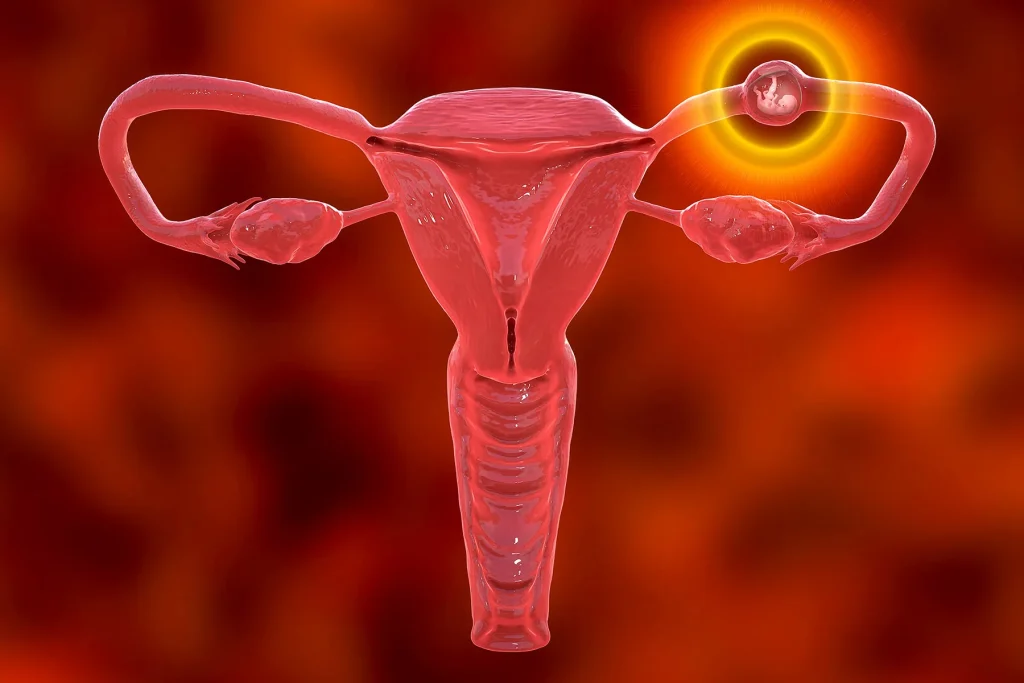
Ectopic pregnancy
An ectopic pregnancy occurs when a fertilized egg implants and grows outside the main cavity of the uterus. Pregnancy begins with a fertilized egg. Normally, the fertilized egg attaches to the lining of the uterus.
An ectopic pregnancy most often occurs in a fallopian tube, which carries eggs from the ovaries to the uterus. This type of ectopic pregnancy is called a tubal pregnancy. Sometimes, an ectopic pregnancy occurs in other areas of the body, such as the ovary, abdominal cavity or the lower part of the uterus (cervix), which connects to the vagina.
An ectopic pregnancy can’t proceed normally. The fertilized egg can’t survive, and the growing tissue may cause life-threatening bleeding, if left untreated.
Causes of ectopic pregnancy
A tubal pregnancy the most common type of ectopic pregnancy happens when a fertilized egg gets stuck on its way to the uterus, often because the fallopian tube is damaged by inflammation or is misshapen. Hormonal imbalances or abnormal development of the fertilized egg also might play a role.
Symptoms of ectopic pregnancy
You may not notice anything at first. However, some women with an ectopic pregnancy have the usual early signs or symptoms of pregnancy a missed period, breast tenderness and nausea.
If you take a pregnancy test, the result will be positive. Still, an ectopic pregnancy can’t continue as normal.
Signs and symptoms increase as the fertilized egg grows in the improper place.
Early warning of ectopic pregnancy
- Often, the first warning sign of an ectopic pregnancy is pelvic pain. Light vaginal bleeding may also occur.
- If blood leaks from the fallopian tube, you may feel increasing abdominal pain, an urge to have a bowel movement or pelvic discomfort. If heavy bleeding (hemorrhaging) occurs, you may feel shoulder pain as blood fills your pelvis and abdomen. Your specific symptoms depend on where the blood collects and which nerves are irritated.
Emergency symptoms
If the fertilized egg continues to grow in the fallopian tube, it can cause the tube to rupture. Heavy bleeding inside the abdomen is likely. Symptoms of this life-threatening event include extreme lightheadedness, fainting, severe abdominal pain and shock.
When to see a doctor
Seek emergency medical help if you have any signs or symptoms of an ectopic pregnancy, including:
- Severe abdominal or pelvic pain during pregnancy
- Abnormal vaginal bleeding
- Extreme lightheadedness or fainting
- Other concerning symptoms, especially if you have risk factors for an ectopic pregnancy
Risk factors
Some things that make you more likely to have an ectopic pregnancy are:
Previous ectopic pregnancy.
If you’ve had this type of pregnancy before, you’re more likely to have another.
Inflammation or infection.
Sexually transmitted infections, such as gonorrhea or chlamydia, can cause inflammation in the tubes and other nearby organs, and increase your risk of an ectopic pregnancy.
Fertility treatments.
Some research suggests that women who have in vitro fertilization (IVF) or similar treatments are more likely to have an ectopic pregnancy. Infertility itself may also raise your risk.
Tubal surgery.
Surgery to correct a closed or damaged fallopian tube can increase the risk of an ectopic pregnancy.
Choice of birth control.
The chance of getting pregnant while using an intrauterine device (IUD) is rare. However, if you do get pregnant with an IUD in place, it’s more likely to be ectopic. Tubal ligation, a permanent method of birth control commonly known as “having your tubes tied,” also raises your risk, if you become pregnant after this procedure.
Smoking.
Cigarette smoking just before you get pregnant can increase the risk of an ectopic pregnancy. The more you smoke, the greater the risk.
Complications
An ectopic pregnancy can cause your fallopian tube to burst open. Without treatment, the ruptured tube can lead to life-threatening bleeding.
Prevention ectopic pregnancy
N.B – There’s no way to prevent an ectopic pregnancy, but here are some ways to decrease your risk:
- Limit your number of sexual partners.
- Always use a condom during sex to help prevent sexually transmitted infections and reduce your risk of pelvic inflammatory disease.
- Don’t smoke. If you do, quit before you try to get pregnant.
Diagnosis
A pelvic exam can help your doctor identify areas of pain, tenderness, or a mass in the fallopian tube or ovary. However, your doctor can’t diagnose an ectopic pregnancy by examining you. You’ll need blood tests and an ultrasound.
Pregnancy test
Your doctor will order the human chorionic gonadotropin (hCG) blood test to confirm that you’re pregnant. Levels of this hormone increase during pregnancy. This blood test may be repeated every few days until ultrasound testing can confirm or rule out an ectopic pregnancy — usually about five to six weeks after conception.
Ultrasound
A transvaginal ultrasound allows your doctor to see the exact location of your pregnancy. For this test, a wandlike device is placed into your vagina. It uses sound waves to create images of your uterus, ovaries and fallopian tubes, and sends the pictures to a nearby monitor.
Abdominal ultrasound, in which an ultrasound wand is moved over your belly, also may be used to confirm your pregnancy or evaluate for internal bleeding.
Other blood tests
A complete blood count will be done to check for anemia or other signs of blood loss. If you’re diagnosed with an ectopic pregnancy, your doctor may also order tests to check your blood type in case you need a transfusion.
Treatment for ectopic pregnancy
A fertilized egg can’t develop normally outside the uterus.
To prevent life-threatening complications, the ectopic tissue needs to be removed. Depending on your symptoms and when the ectopic pregnancy is discovered, this may be done using medication, laparoscopic surgery or abdominal surgery.
Medication
An early ectopic pregnancy without unstable bleeding is most often treated with a medication called methotrexate, which stops cell growth and dissolves existing cells. The medication is given by injection. It’s very important that the diagnosis of ectopic pregnancy is certain before receiving this treatment.
After the injection, your doctor will order another HCG test to determine how well treatment is working, and if you need more medication.
Laparoscopic procedure
In other cases, an ectopic pregnancy can be treated with laparoscopic surgery. In this procedure, a small incision is made in the abdomen, near or in the navel. Next, your doctor uses a thin tube equipped with a camera lens and light (laparoscope) to view the tubal area.
The ectopic pregnancy is removed and the tube is either repaired (salpingostomy) or removed (salpingectomy).
Which procedure you have depends on the amount of bleeding and damage and whether the tube has ruptured.
Emergency surgery
If the ectopic pregnancy is causing heavy bleeding, you might need emergency surgery through an abdominal incision (laparotomy). In some cases, the fallopian tube can be repaired. Typically, however, a ruptured tube must be removed (salpingectomy).
Coping and support
Losing a pregnancy is devastating, even if you’ve only known about it for a short time. Recognize the loss, and give yourself time to grieve. Talk about your feelings and allow yourself to experience them fully.
Rely on your partner, loved ones and friends for support. You might also seek the help of a support group, grief counselor or other mental health provider.
Many women who have an ectopic pregnancy go on to have a future, healthy pregnancy. The female body normally has two fallopian tubes. If one is damaged or removed, an egg may join with a sperm in the other tube and then travel to the uterus.
If both fallopian tubes have been injured or removed, in vitro fertilization (IVF) might still be an option. With this procedure, mature eggs are fertilized in a lab and then implanted into the uterus.
If you wish to try to get pregnant again, get regular doctor’s checkups. Early blood tests and ultrasound testing quickly spot an ectopic pregnancy or provide peace of mind that the pregnancy is developing normally.
Visit us on : www.healthalert.co.za
Calls us on : +27 82 0941 375
Email us on : info@healthalert.co.za